
Twenty-seven leading Algerian scientists living abroad now advise the presidency. Several of them built their careers in the United States.
“We live abroad, but we are not foreigners.”
Dr. Elias Zerhouni, council coordinator, to President Tebboune (translated from French)
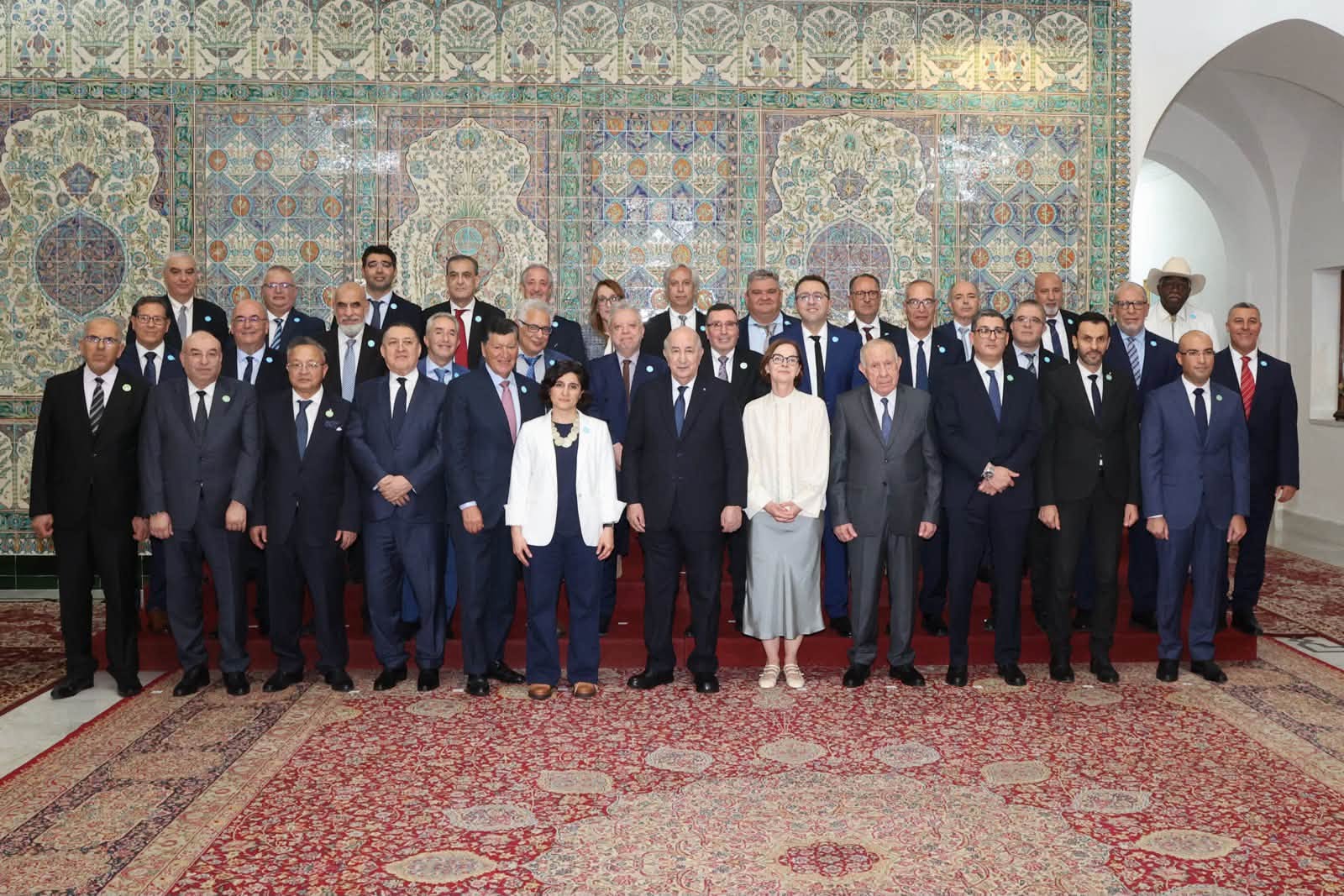
Twenty-seven Algerian scientists who built their careers abroad met in Algiers on Sunday, September 27, 2026, for the first session of the High Council of the National Scientific Community Abroad. Later that day, President Abdelmadjid Tebboune received them at the presidency, joined by the ministers of higher education, health, the pharmaceutical industry and the knowledge economy.
Several of the names will be familiar to our community, and some of them live and work here in the United States.
members, all based outside Algeria
national priority areas
months covered by the first roadmap
date of the decree creating the council
The High Council is an advisory body that reports directly to the President of the Republic. Its job is to bring the expertise of Algerian scientists abroad closer to the country’s needs, including the scientific and technical review of projects of national importance.
It came together over three months and was made official by a presidential decree on September 7. Dr. Elias Zerhouni, former director of the US National Institutes of Health, serves as its coordinator.
The initiative is launched at a founding meeting in Algiers.
Members hold an organizing meeting.
A presidential decree makes the council official.
First session, then an audience with the president.
Algerian media have profiled eleven of the 27 members so far. At least five built their careers in the United States.
Radiologist and biomedical engineer. He led the US National Institutes of Health from 2002 to 2008.
Silicon Valley inventor with more than 1,500 patents in electronics and chip packaging.
Professor of mechanical engineering at MIT, working on robotics and precision control systems.
Professor of radiology at the Icahn School of Medicine at Mount Sinai in New York.
MIT researcher who applies mathematics and fluid mechanics to health and epidemic prevention.
Zerhouni, Haba and Belkaid already appear in our Change Makers section.
Head of the Institut Pasteur in Paris, after many years at the US National Institutes of Health.
Specialist in lithium-ion batteries. Algeria plans to draw on his expertise to develop its lithium sector.
Known for high-performance, earthquake-resistant concrete.
Heads the signal processing group at the Technical University of Darmstadt in Germany.
Specialist in subsurface exploration.
Works on regenerative medicine.
Higher Education Minister Kamel Baddari named five areas where diaspora expertise is wanted. He described the goal as moving from occasional contacts with scientists abroad to a permanent institutional partnership.
Zerhouni handed the president a roadmap for the next 12 months. It rests on three commitments:
Work alongside researchers inside Algeria, not in isolation.
Open the effort to qualified Algerians abroad beyond the 27 members.
Stay accountable to national priorities.
The council’s studies and recommendations will go directly to the presidency.
The council is small, but its plan reaches further. Zerhouni said the group wants to build a larger pool of qualified Algerians abroad, and that some specialties still need more advisers. He added that many people have already written to him asking to take part.
For a community with as many engineers, physicians, researchers and founders as ours, that is worth watching. The coverage we reviewed does not yet say how people outside the council can get involved. We will share details here as they are published.
If you work in one of the five priority fields, we would like to hear from you. Join our WhatsApp or Signal group and help us connect the people in our community who share your expertise.
Sources: Algérie Presse Service · Echos Plus · TSA · DIA